15-18 un.(0.9 kg.- 1.0 kg.)
15-18 un.(0.9 kg.- 1.0 kg.)
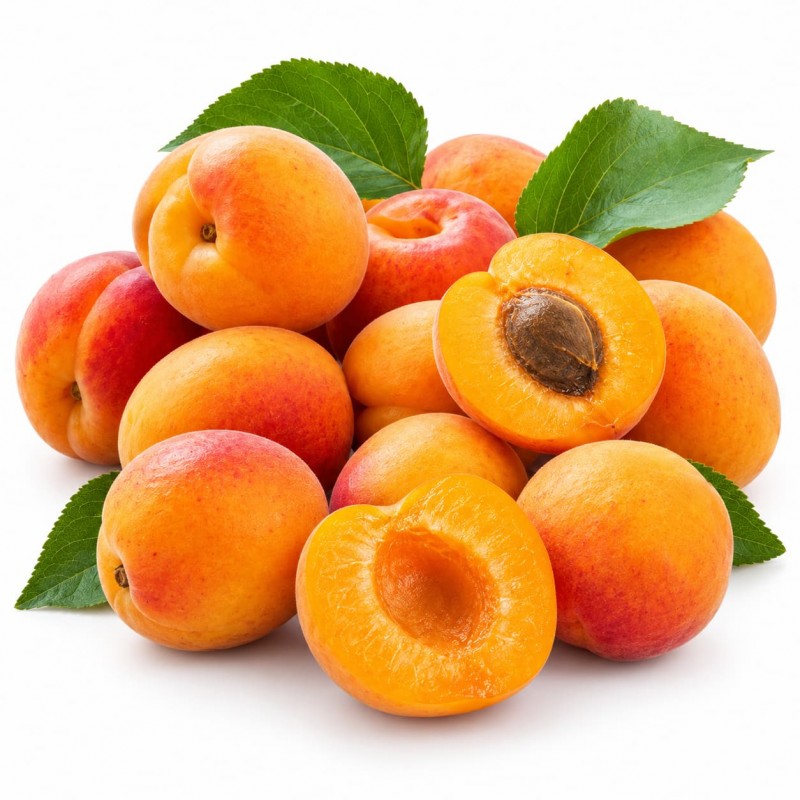
Apricot
(Armeniaca vulgaris JUSS)
Damascus or Alberénigo
 The Apricot is native of the temperate zones of Asia and Africa, concretely it is known that it already existed in China 3.000 years ago a.J.C. The Romans also consumed it and they were the ones who introduced the Apricot in Europe through Armenia (from there comes its name in Latin).
It is a herbaceous plant of the Rosaceae family. Its tree is the apricot tree. It needs temperate climates to be cultivated, but it is not too sensitive to cold.
The main apricot producing countries are: Turkey, Switzerland, Greece, Spain, France, USA, South Africa, New Zealand. In Spain it is grown without problems in all the Mediterranean provinces.
|
Properties / Health
Apricot |
Varieties / Season
Apricot |
Apricot Recipes
|
|
Apricots are high in fiber, low in carbohydrates.
It has beneficial properties for:
Articles of interest:
|
There are 2,000 species of apricots and they are consumed from spring to late summer. The best known varieties are:
This fruit can not be harvested green because otherwise it will never taste like anything, so when harvested ripe, it becomes very fragile to handle and transport. When buying them, you must take into account that they are ripe, that they are not with bumps and spots, that they are not overripe (they get wrinkled). Once at home, they are stored in the refrigerator in a plastic bag with holes in it. They do not last more than 3 or 4 days in optimal state. |
The apricot is a very tasty, sweet fruit. They should be eaten by athletes and children because of their vitamin content. Suggested recipes:
|
Information provided by Adefrutas.