5- 6 und.(0,3 kg.- 0,4 kg.)
5- 6 und.(0,3 kg.- 0,4 kg.)
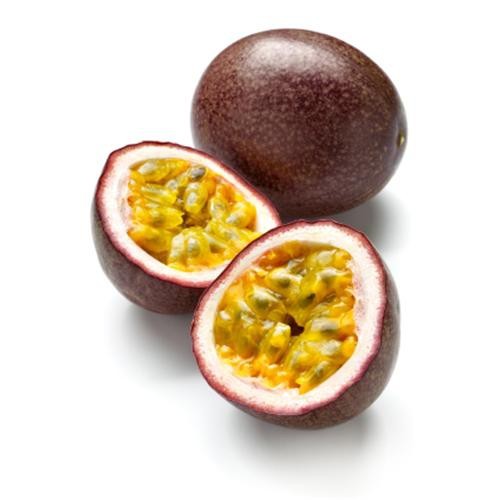
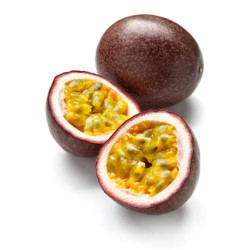
Passion Fruit in tray format of 6 units with an approximate weight between 0.3 Kg and 0.4 Kg. The Passion Fruit can be consumed as a dessert, even so, due to its numerous seeds, it can be somewhat annoying because of the scarce pulp that surrounds them, however, these seeds are totally edible. The main use of this fruit is to make it into soft drinks, ice cream, salads or jellies. T
When ripe, the skin of the fruit shows a wrinkled appearance of purple, green mottled with white, to lemon yellow on the outside. Depending on the variety, it keeps very well, but it is recommended to be eaten within 8 days.
In our physical and online store we usually have it all year round.
Per 100 gr of edible pulp:
Calories 97 kcal
Fiber 10.4 g
Vitamin B2 0.13 mg
Calcium 12 mg
Potassium 348 mg
Protein 2.2 g
Fat 0.7 g
Vitamin C 30 mg
Phosphorus 68.0 mg
Zinc 0.1 mg
Carbohydrate 13.0 g
Vitamin A 0.7 mg
Niacin 1.5 mg
Iron 1.60 mg
Sodium 28 mg
Passion Fruit also known as Passiflora edulis is a fruit native to South America. The fruit is identified in the American tropics and although Spanish discoverers and chroniclers first called it "Granadilla", it was the missionaries who renamed it Passion Fruit.
The plant develops and thrives well in subtropical climates. Adult plants can survive low frost. It is a robust plant, with markedly aristate stems that reach 50 to 80 centimeters long, with flattened, simple and alternate leaves.
Passion fruit is low in fat, low in calories and high in fiber, with a laxative effect.
It is rich in Vitamins A, B1, B2, B12, and C. It also contains minerals: Potassium, Phosphorus and Magnesium.
Purple (P. Edulis edulis) is the smallest purple variety. Also known as "granadilla purpurea"
Granadilla or Granadilla Dulce (P. Edulis ligularis) also known as pomegranate because of its skin color. Orange fruit with light spots when ripe.
Passion Fruit or Passion Fruit yellow (P. Edulis Flavicarpa) green color that when ripe tends to lighten to yellow and is when it is ready to be consumed.
Some commercialized hybrids:
It is ideal for salads, soft drinks, ice cream, smoothies or even on its own.