6-8 units approx. per kilo

6-8 units approx. per kilo
Turnips
(Brassica napus)
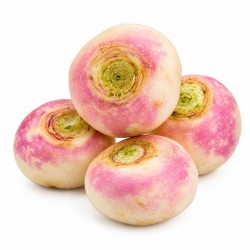
 Turnipsare from the Cruciferae family, of the Napus variety. They need cold or temperate climates for good growth.
Turnip greens and turnips are the leaves of turnips, which come out before flowering. Both have more vitamins than the turnips themselves.
The origin of turnips is not well defined, it is not known if it originated in Central Asia or Europe. Remains have been found, which show that it was cultivated 4,000 years ago and it is known that the Greeks and Romans consumed it. During the Middle Ages it was very important in the diet of European countries, until the arrival of the potato in the 18th century, which gradually replaced the turnip. The potato arrived from America with the Spanish conquistadors and spread throughout Europe.
Nowadays, the turnip is consumed very little and is grown mainly for animal feed. The main turnip producing and consuming countries are: Germany, southern USA and in southern Europe.
|
Properties / Health
Turnips |
Varieties / Season of Turnips
|
|
Turnips contain 90% water, a lot of fiber, carbohydrates and very low in calories, which makes it a good ally of slimming diets.
Recommended for:
|
Turnip has almost 400 genera and about 30,000 species. It can be consumed all year round, but the season in which it is at its best is autumn.
When buying them, we should never buy them too big, always medium or small, so that they are more tender. They should be smooth and smooth and their color should be white or purple. |