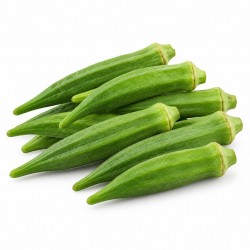
Kilo
Este producto no contiene alérgenos.

Kilo
Chard
(Beta vulgaris L.)
 Chard belongs to the Chenopodiaceae family and to the Cicla variety. They need a temperate climate in coastal areas or saline soils.
It is native to the European countries of the Mediterranean coast and North Africa. It is known that it was already consumed in the 1st century d.J.C. It was cultivated by the Greeks, Romans, Arabs... It is also known that the Arabs developed its cultivation and discovered its medicinal properties.
Chard did not reach the USA until 1806, but today it is one of the main producing countries, together with Asia, Italy, France, Holland, Belgium, Germany and the United Kingdom. Spain exports chard to France.
|
Chard
Properties / Health |
Varieties / Season
of Swiss Chard |
Chard Recipes
|
|
Chard contains 91% water, very few calories, carbohydrates and fiber. It is ideal for those who want to follow a slimming diet. Chard contains:
Recommended for:
|
There are more than 1,400 varieties of the Chenopodiaceae family, but the genus Beta vulgaris is classified into 2 varieties:
They can be consumed all year round, but the best time is in autumn and winter. When buying them, it is very important that they are very fresh, that is to say, the leaves are very green, shiny, smooth, without pitting or stains, the stalks are very stiff. They only last at most a couple of days in the refrigerator. It is best to consume them on the day. Now they sell them already washed and cut with expiration date, for those who work and do not have time to spend too much time preparing and cleaning them. |
The consumption of chard has been increasing due to slimming diets and the cult of the line. More and more people are trying to eat a healthy and balanced diet, eating lots of vegetables and fruits, fish and little red meat. Chard is usually eaten boiled with a potato or rehogaditas with some garlic, to eat it as natural as possible. But, if we take it raw, we would be receiving the total of its vitamin contribution. Suggested recipes:
|